

Guide
Wild camping in Sweden: what are you really allowed to do?
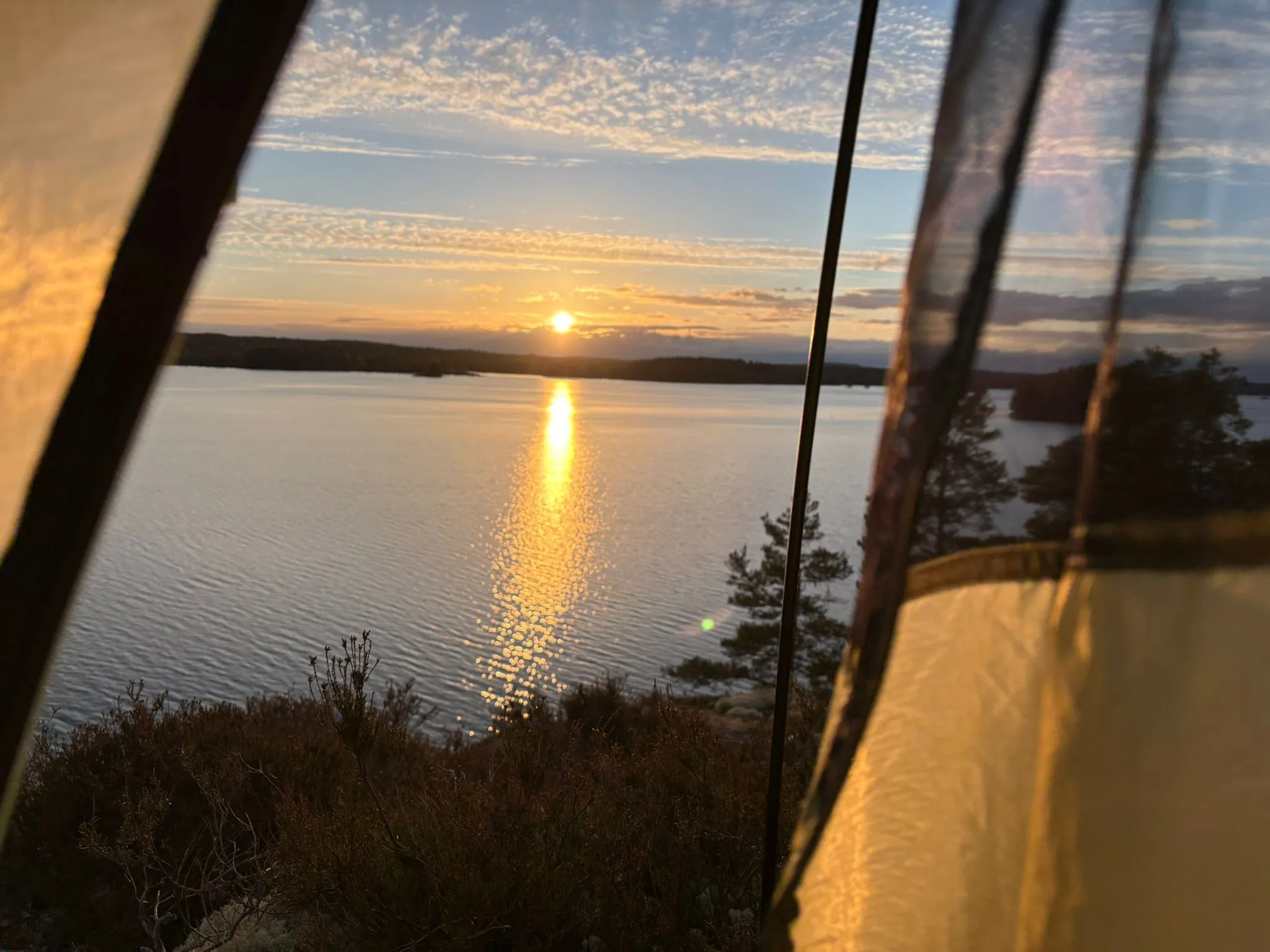
You open the tent, and there’s a lake in front of you. Moments like that draw me to Sweden. Here I’ve put together what you’re allowed to do, where you can’t, and why a car is a different story.
The view from the tent. I don’t need much more.
The short answer
Before I set off, there is one thing I want to know above all: may I stay here? In Sweden the answer is wonderfully simple, as long as you come with a tent. The right of public access (allemansrätten) lets you stay out in nature for a night or two. With two or three tents you don’t have to ask anyone. If there are more of you, ask the landowner first. A tarp between two trees counts much like a tent; just leave the nails at home. And don’t build anything from fallen trees, as that needs permission.
Sources: Sweden: rules & notes · Naturvårdsverket: Camping · Naturvårdsverket: Frågor och svar om allemansrätten
Where your tent fits in
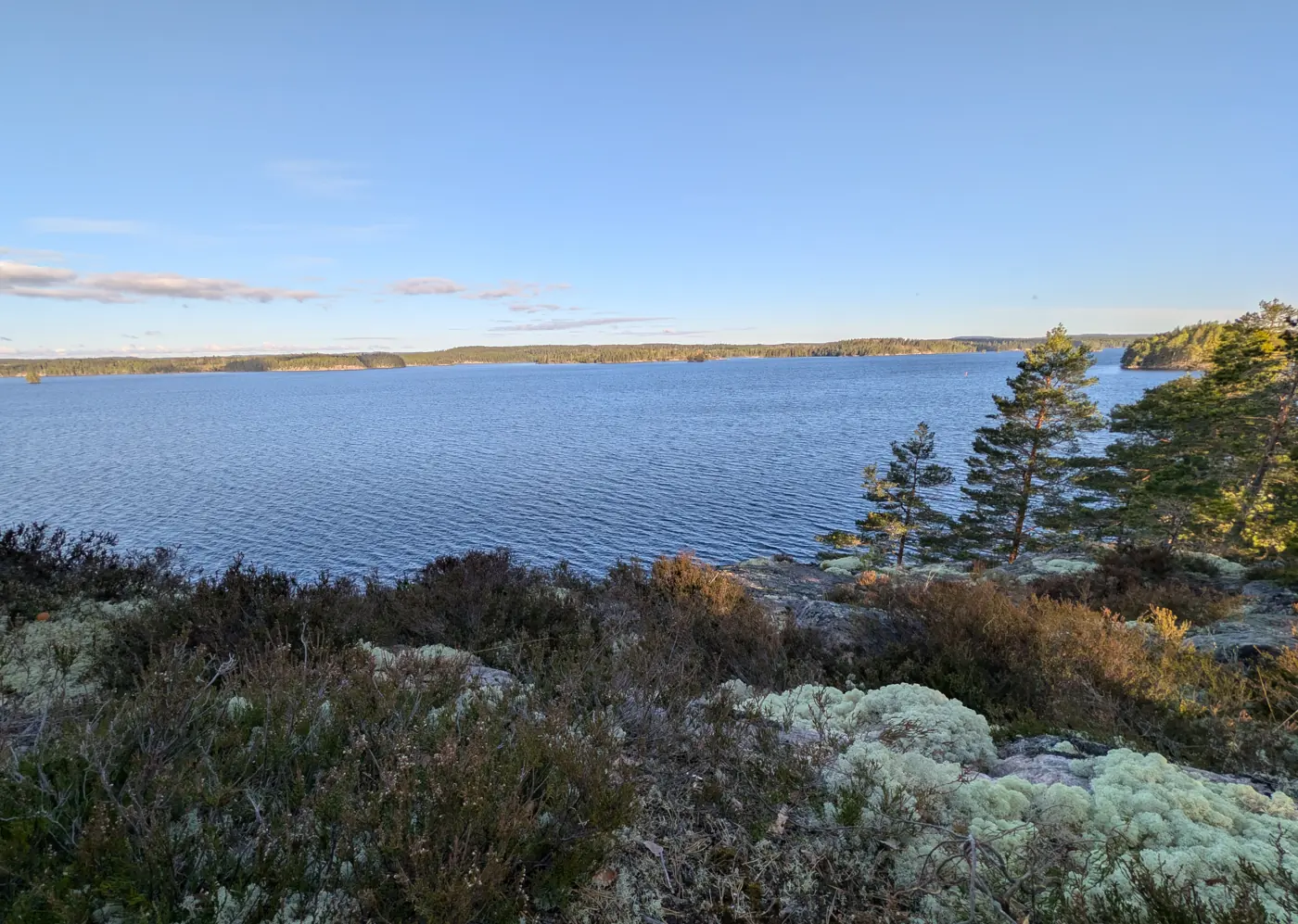
Look for a spot where no one can see or hear you from their home. There is no fixed distance. For me that means: if I have to wonder whether it’s too close, I walk a little further. The spot usually gets better that way anyway. Choose solid ground. Fields and pastures are off limits. Tents may be banned in parks, on sports grounds and at bathing spots; each municipality sets its own rules.
Sources: Naturvårdsverket: Camping · Naturvårdsverket: Tältning · Naturvårdsverket: Frågor och svar om allemansrätten
And in a national park?
Here it pays to look more closely. Each of the 31 national parks has its own rules, and I have gathered them all for WildStops. In 8 parks you may camp freely, for example in Sarek, Padjelanta and Tresticklan. In 11, tents are allowed only at designated sites, as in Abisko, Tiveden and Tyresta. In 9 it depends on the zone. And in 3 you can’t camp at all: Dalby Söderskog, Blå Jungfrun and Norra Kvill. Every park has its own page here. In nature reserves, too, tents are usually allowed only at designated sites. Read the board at the entrance before you go on.
Sources: All 31 national parks at a glance · Naturvårdsverket: Camping
By car, motorhome or roof tent?
You’ll read very different things about this online. So I went by what the Swedish Environmental Protection Agency says: the right of public access doesn’t cover motor vehicles. In the forest, on a beach or in a meadow you may neither drive nor park, and not even the landowner can allow it. Right beside a road there is no general time limit. Close to a home, though, you ask first, even for one night. At rest areas you can usually stay up to 24 hours on weekdays, and at weekends until the next working day. Signs and municipal rules come first. And on private roads, the owner decides whether you may drive there at all. My advice: leave the car in the car park and walk the last stretch. Then the right of public access is yours again.
A fire in the evening?
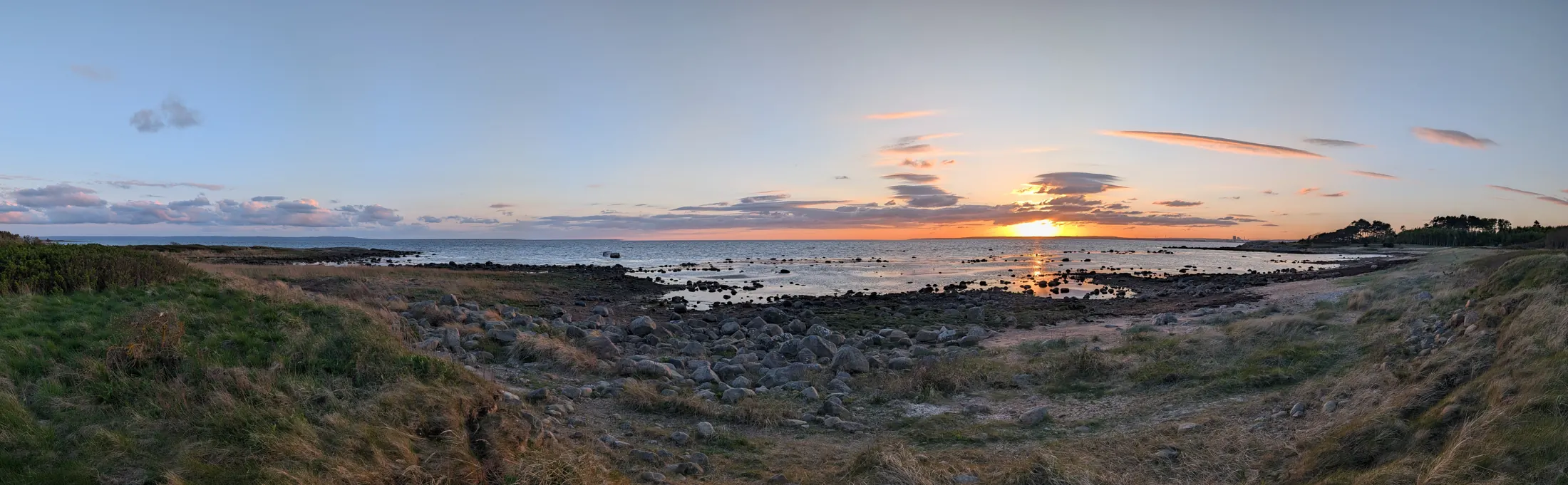
I understand why an evening like this calls for a fire. But the right of public access doesn’t entitle you to one. Best to use a fixed fire pit or a stove. Moss, peat, forest soil and bare rock are poor places. You may gather small branches and cones from the ground, except in some national parks. Check beforehand whether there is a fire ban (eldningsförbud). Put everything out before you leave, and check the ash for embers. If you’re not sure, leave it. It will be a good evening all the same.
Sources: Sweden: rules & notes · Naturvårdsverket: Eldning · Sveriges nationalparker: Rules and guidance
With a dog, among reindeer
Is your dog coming along? Then keep it on a leash from 1 March to 20 August, when wild animals have their young. Where reindeer live, keep it leashed all year. And if you suddenly find a herd in front of you: stay calm, keep your distance and simply watch. If it moves on, you were too close.
Sources: Naturvårdsverket: Dogs in nature · Naturvårdsverket: In the mountains
Fishing from a kayak
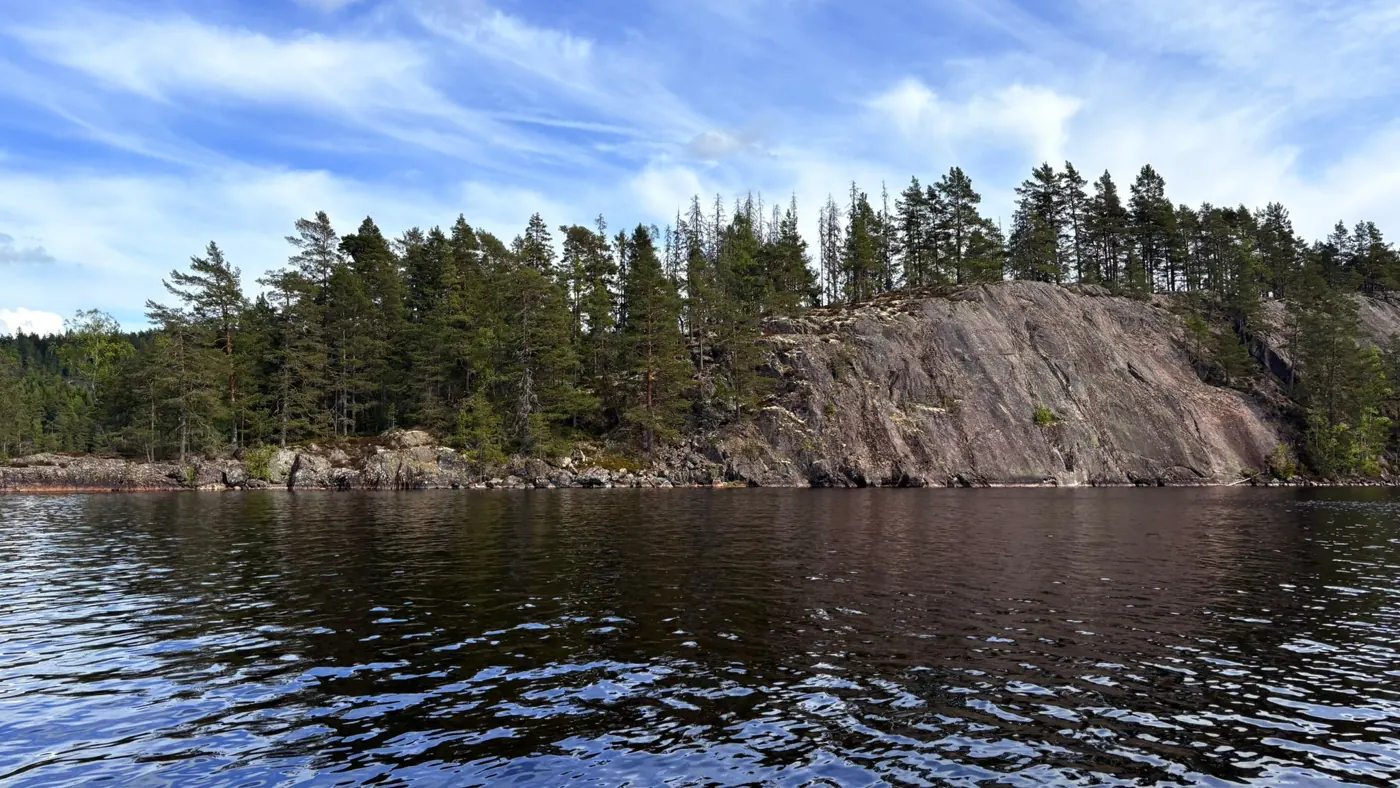
I was out in Sweden with a kayak to go fishing. Under the right of public access you may go out on the water almost anywhere. Fishing, though, isn’t part of it. In most lakes and rivers you need a fishing permit (fiskekort). Without one, you can fish with hand-held gear in public waters, in some private coastal waters and in the five largest lakes: Vänern, Vättern, Mälaren, Hjälmaren and Storsjön in Jämtland. Of the 31 national parks, 14 prohibit fishing; you’ll find it on each park’s page. And in a kayak you are so quiet that you can quickly get too close to nesting birds. Better keep your distance. Leave a jetty that belongs to a house alone.
Planning to fish here? For information on where it’s allowed and what conditions apply, take a look at EuroAngler.
Sources: Naturvårdsverket: Hunting and fishing · Naturvårdsverket: By the shore · All 31 national parks at a glance
Where to find real quiet
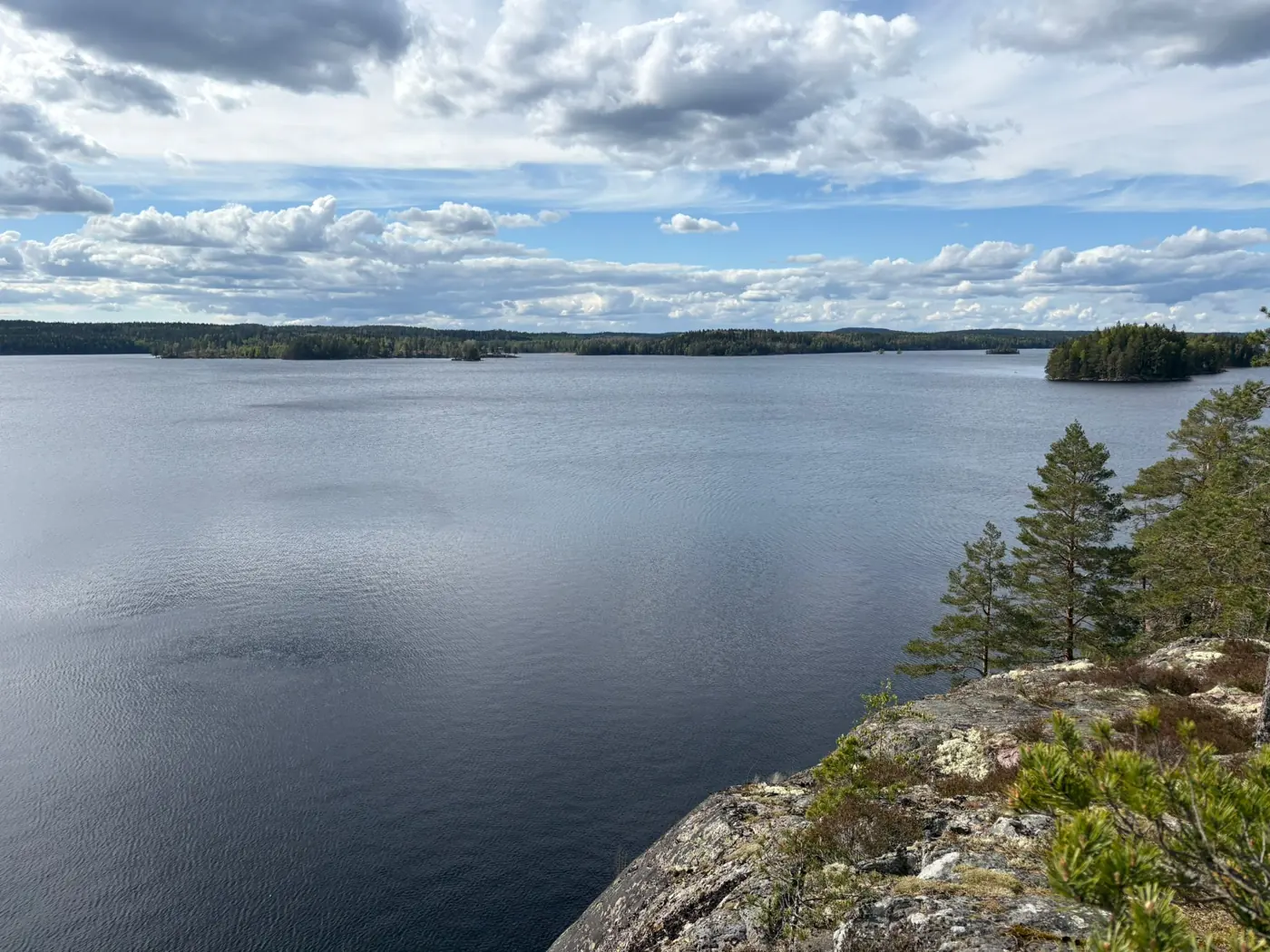
For me, this is the real question. I look for places where I don’t end up in the middle of a crowd. That’s why WildStops has an estimate for each of the 21 regions of how much land lies more than 2 km from roads and settlements. Norrbotten comes first with about 55%, followed by Jämtland with 31% and Västerbotten with 27%. The figure doesn’t say whether you’ll be alone there. But it shows you where the roads end. Just remember: the further out you are, the more depends on you, on your food, on the weather and on the way back.
Sources: All 21 regions
The morning after
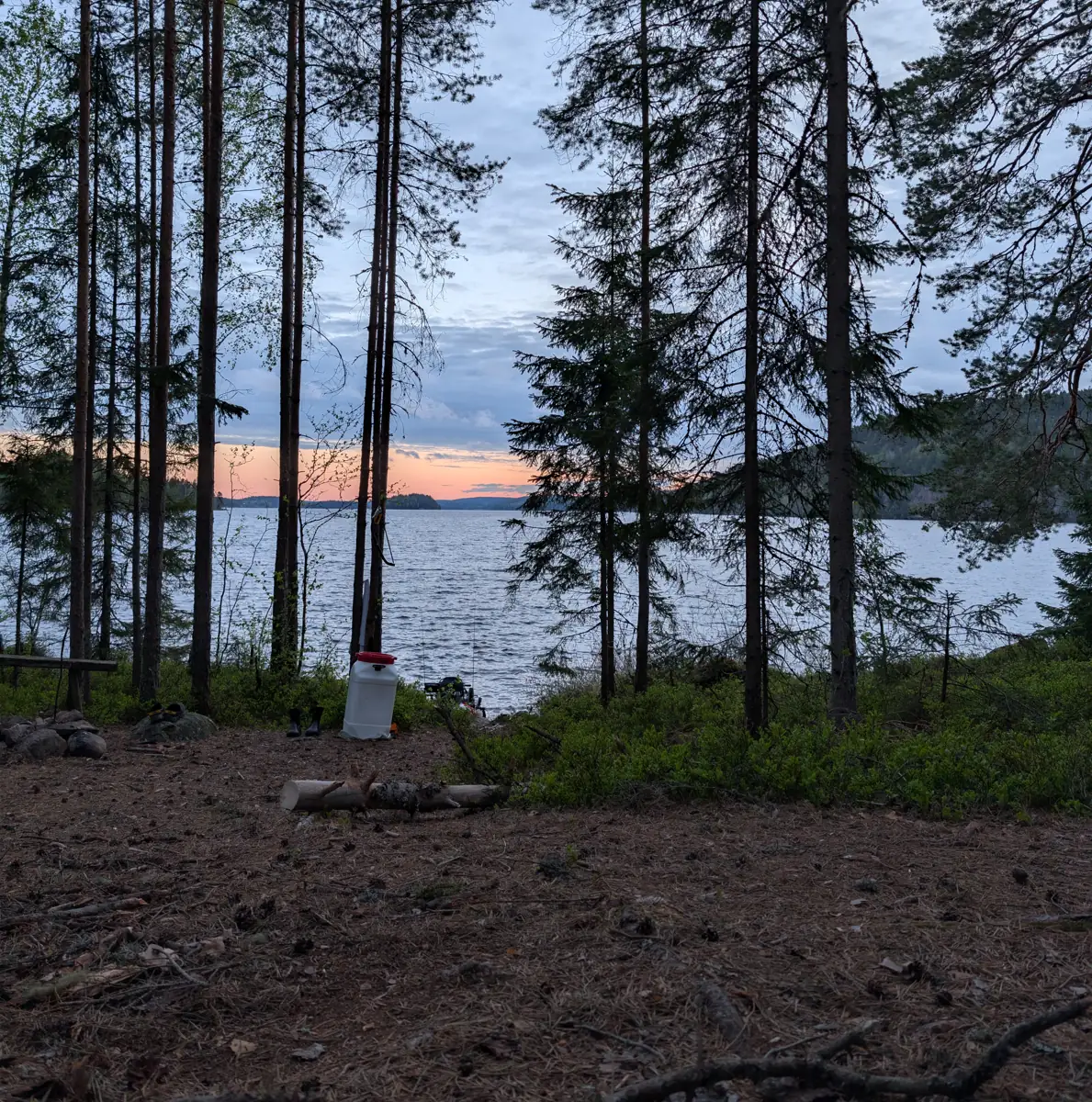
For me, this is the best time. It’s still quiet, and the day hasn’t asked anything of you yet. Before you move on, take everything with you, food scraps included. Sausage and ham can spread African swine fever. If there’s no toilet, dig a hole well away from water and paths, and cover it properly. And should something happen after all, the emergency number is 112. Turn around one last time.
If no one can tell you were there, you did everything right.
Sources: Naturvårdsverket: Tältning · Sweden: rules & notes