

Rules & tips
Sweden
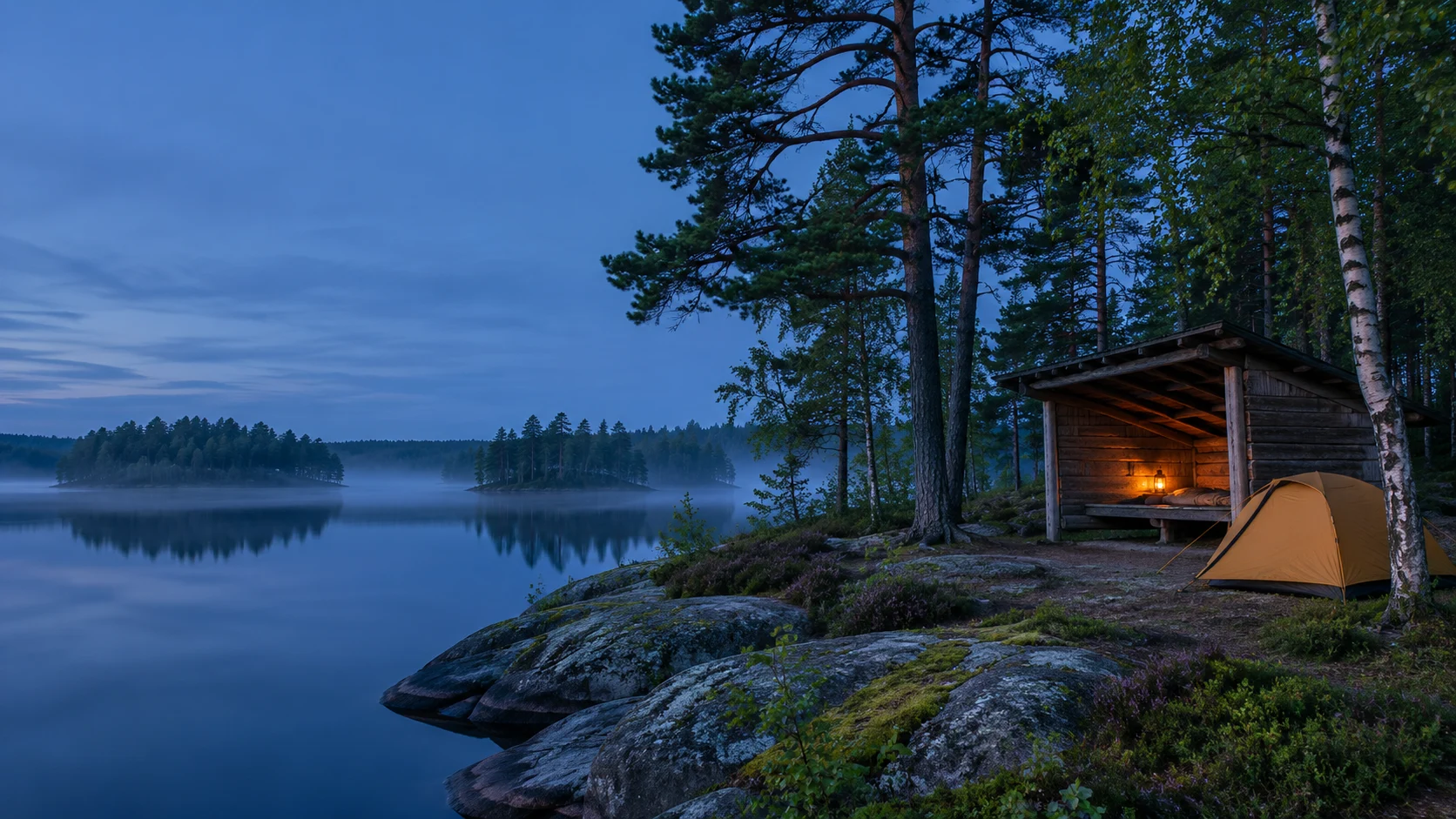
Quiet lakes. Pines in the evening light. And time to settle into the outdoors. Prepare for your escape to Sweden with guidance on camping, shelters and the rules to know before you go.
AI-generated atmosphere image · not a listed place
Head out prepared
Enjoy nature. Explore with care.
Stay out for a night or two: the right of public access opens up many possibilities. Keep away from homes and take care of the land. Protected areas have their own rules; check for fire bans before lighting a campfire.
Camping
- Camping with a few tents for one or a few nights falls under the right of public access (allemansrätten).
- Keep away from homes. Do not camp on pasture, fields or plantations.
- Large groups with many tents or longer stays need the landowner’s permission.
- Your own tarp between trees is treated like a tent. Shelters built from fallen trees need the landowner’s consent.
Sources: Naturvårdsverket: Tältning · Naturvårdsverket: Frågor och svar
National parks and nature reserves
- Protected areas have their own rules. Camping is often allowed only at designated sites, fires only at established fire pits or not at all.
- Municipalities can also have local rules, for example for beaches.
- Follow the signs on site and the county board (Länsstyrelsen) pages. Our map shows the area name for places inside protected areas.
- Some areas close temporarily, usually to protect birds and seals. These closures are called tillträdesförbud in Swedish. Turn on “Protected areas” to see active closures in red on our map. Places inside a closed area also show the dates. Still follow the signs on site: the information from Naturvårdsverket can change.
Sources: Naturvårdsverket: Allemansrätten i skyddade områden · Naturvårdsverket: Tältning · Naturvårdsverket: Open data Naturvårdsregistret (Tillträdesförbud, CC0)
Huts and shelters
- Rest shelters (rastskydd) and rest huts (raststugor) in the mountains are for breaks and emergencies. Overnight stays there are only allowed in an emergency.
- There is no general official rule on sleeping in lean-tos (vindskydd). Protected areas may have their own rules. Our map therefore lists them under “Shelters & cover”.
- Do not leave food in a lean-to or rest hut.
Sources: Lantmäteriet: Fjällkartan, allmän information · Länsstyrelsen Norrbotten: Leder och stugor · Naturvårdsverket: Frågor och svar
Fire
- The right of public access gives no automatic right to make a fire. Whoever lights one is responsible.
- Before lighting a fire, check for a fire ban (eldningsförbud). The municipality or county authority explains what the ban covers and whether there are exceptions for established fire pits.
- Use an established fire pit. Avoid peat, moss, forest soil and bare rock. Keep the fire small and put it out completely before moving on.
Sources: Naturvårdsverket: Eldning · Länsstyrelsen: Brandrisk och eldningsförbud (Beispiel Norrbotten)
Emergencies
- Call 112 in acute, life-threatening situations.
- In the mountains (fjäll) call 112 too. The police lead the rescue there, supported by the volunteer Fjällräddning (mountain rescue).
- 1177: health advice from nurses around the clock when it is not life-threatening.
- Some protected areas have emergency phones (hjälptelefon); they are on the map under “Water, toilets & more”.
Sources: Polisen: Fjällräddarna · 1177: Ring 1177 – sjukvårdsrådgivning dygnet runt